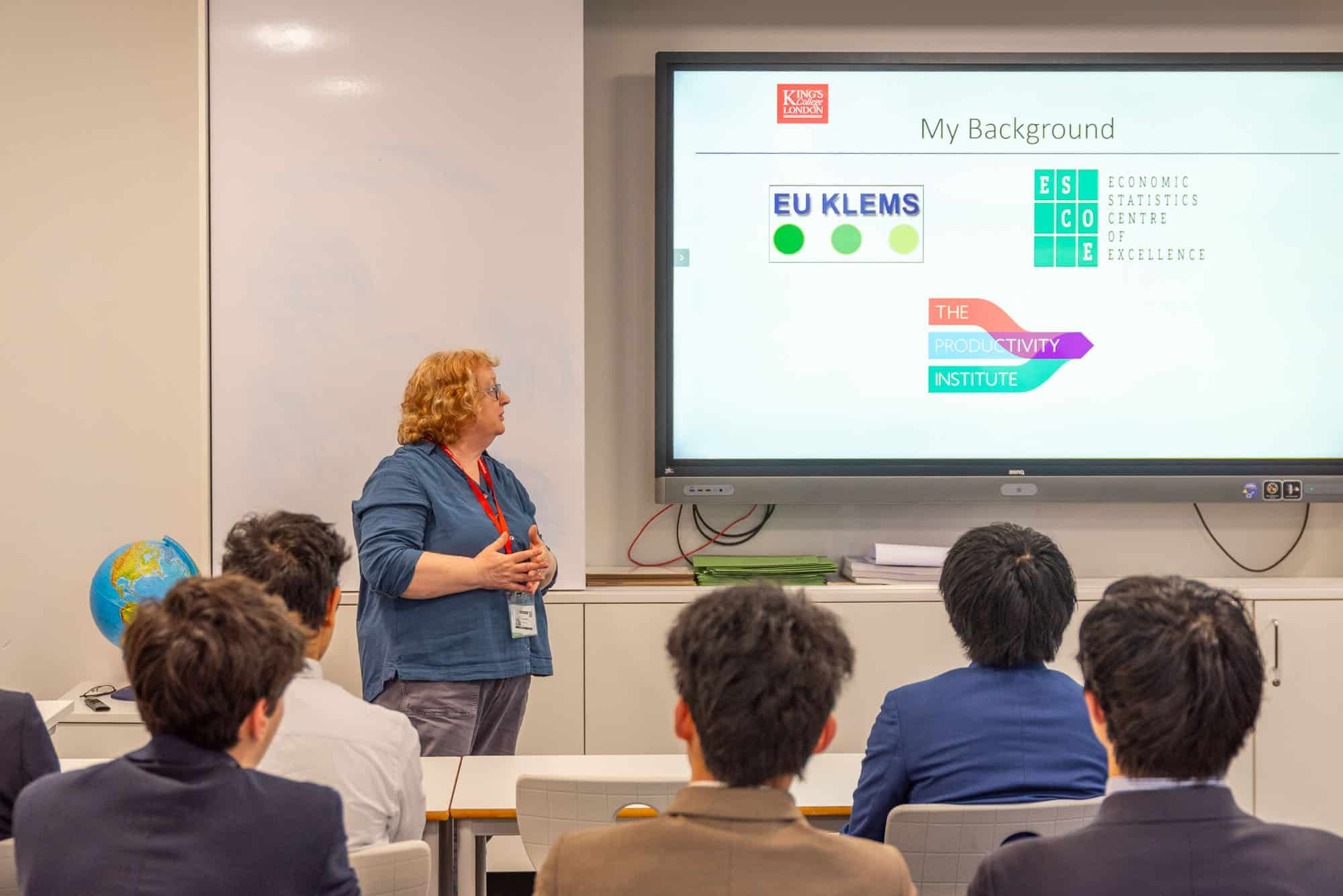
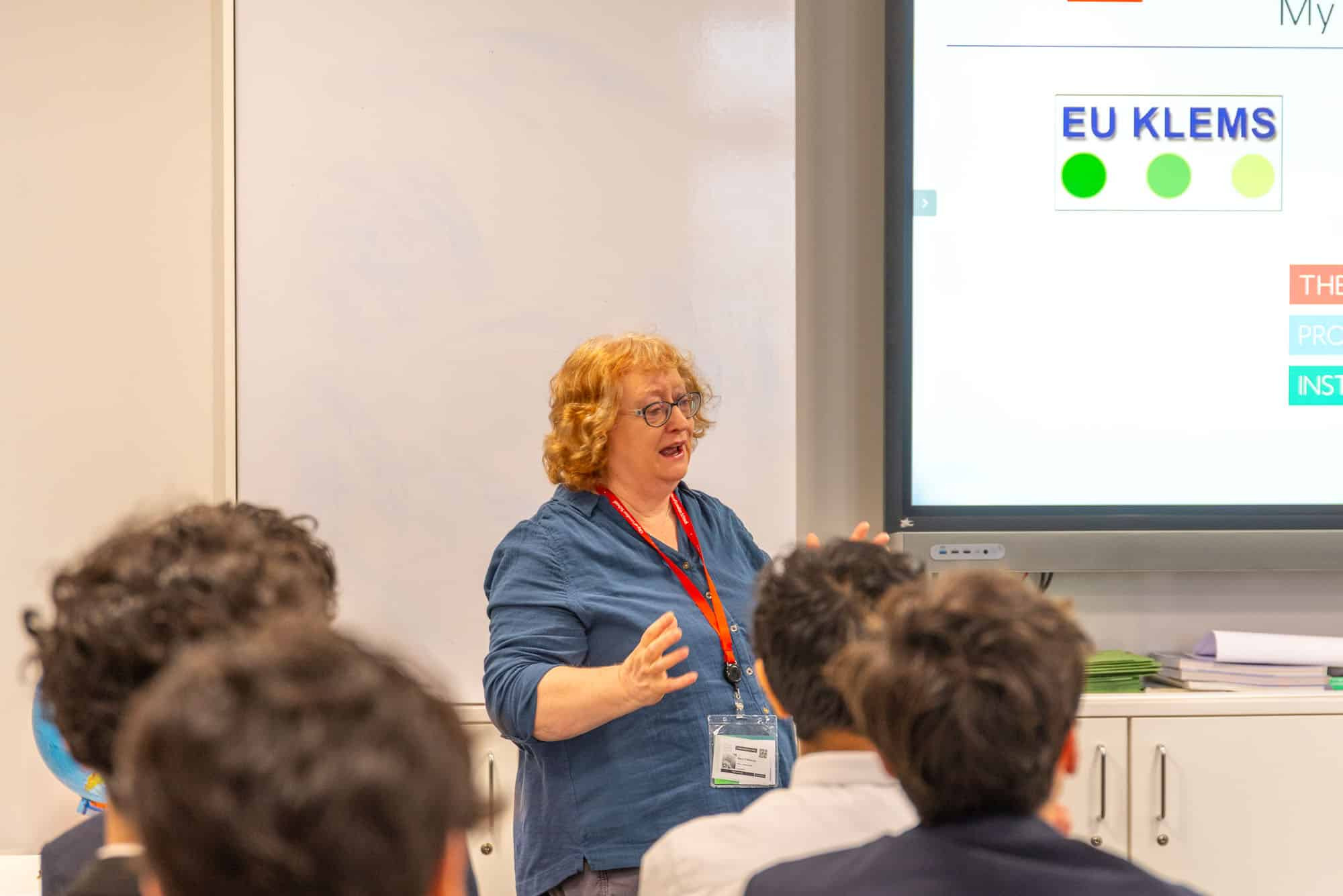
Drawing on years of research into productivity and economic measurement, Professor O’Mahony explained how skill levels shape both individual performance and national productivity. She highlighted that skill shortages don’t just slow output, they can prevent firms from adopting new technologies altogether.
A highlight of the talk was new evidence from large datasets of online job advertisements. Instead of focusing solely on qualifications, this research reveals what employers actually look for: a broad mix of digital skills. While advanced skills such as coding and data analysis remain in high demand, Professor O’Mahony showed that intermediate and basic digital skills, especially everyday business software, are sought across almost every sector.
She also explored the regional divides behind the UK’s productivity gap. London and the South East continue to dominate demand for advanced digital skills, with other regions, including Manchester, making progress but still facing sizeable disparities.
Challenging common assumptions, Professor O’Mahony stressed that digital skills are not the preserve of graduates. Many non‑graduates, particularly those trained through further education colleges, hold strong digital competencies and are increasingly competitive in the labour market with wage gaps between graduates and skilled non‑graduates beginning to narrow.
Artificial intelligence also featured prominently. While AI‑related skills are becoming more common in job adverts, they still represent a modest share overall. More striking, Professor O’Mahony noted, is the growing importance of soft skills; problem‑solving, leadership and initiative, as AI reshapes roles rather than replaces them.
For pupils preparing for a fast‑changing workplace, Professor O’Mahony left a clear message: future success will come from combining digital confidence with adaptable, human‑centred skills.